
Cross-Platform App Development Services
Cross-Platform App Development Services
Maximize Your Reach. Minimize Your Effort
We specialize in cross-platform app development, ensuring your applications run smoothly on multiple platforms. They deliver efficient, user-friendly solutions tailored to meet diverse business needs.
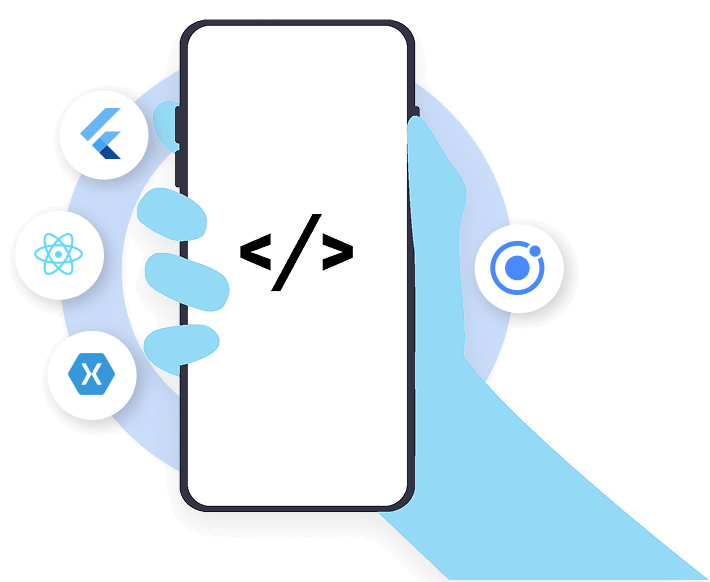
Explore our Cross-Platform App
Development Services:
Custom Web Development

API Development

UI/ UX Designing
Why choose Us?
Choose Cloud Analogy for your next cross-platform app development to leverage expert solutions that ensure faster deployment, cost savings, and a seamless user experience across all platforms.
- Skilled team who has expertise in various cross-platform frameworks.
- Offer competitive pricing, reducing overall development costs by reusing code across platforms.
- Streamlined processes ensure quicker deployment, allowing you to reach your audience sooner.
- Focus on delivering a uniform design and functionality across all devices, enhancing user satisfaction.
- Single codebase simplifies updates, making it easy to manage and maintain your app.
- Tailors solutions to meet your specific business needs and goals.
- Provide ongoing support to address any issues post-launch, ensuring your app runs smoothly.
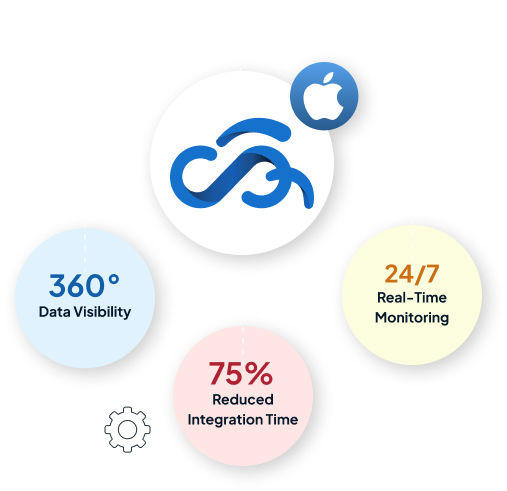
0
+
Projects Delivered Globally
0
+
Satisfied Clients
0
+
Experts
0
Years of Excellence
What sets us apart?
Timely Delivery, Every Time.
High-Performance Apps, Expertly Crafted.
Flexible Solutions with No Long-Term Obligations.
Scalable Security That Grows With You.
Unmatched Industry Expertise and Insight.
Client-Centric Approach, Always Available to Assist.
We Provide Cross-Platform App Development Services
We develop high-quality cross-platform apps that deliver a smooth experience on both Android and iOS, ensuring efficiency, scalability, and cost-effectiveness.
Custom Cross-Platform Apps
We build tailored apps that run smoothly on Android and iOS. Our solutions ensure a seamless user experience across multiple devices.
Efficient Code Reusability
Our developers use frameworks like Flutter and React Native to write a single codebase. This reduces development time and costs while maintaining high performance.
Fast and Scalable Development
We use agile methodologies to create scalable apps with faster delivery. Our approach ensures your app adapts to future business needs.
Integration & Maintenance
We provide hassle-free third-party integrations and continuous updates. This keeps your app secure, up-to-date, and compatible with the latest technologies.
Transforming Visions into Powerful Cross-Platform App Development

































Providing Digital Solutions To Businesses Of
Diverse Industries

Healthcare

Retail & Ecommerce

Travel & Tourism

Professional Business

Education

Media & Entertainment

Events

Food & Restaurants

Automotive

Fashion

Finance

Real Estate
Creating Dynamic Mobile Solutions for All Needs
01Consultation & Strategy
We analyze your requirements, align business goals, and create a clear roadmap for efficient cross-platform mobile development servcies.


02UI/UX Design & Development
We design intuitive user interfaces and develop high-performance apps that work smoothly on multiple platforms.
03Testing & Optimization
We ensure your app is secure, bug-free, and delivers a smooth user experience across different devices and operating systems.

04Launch & Deployment
We manage the app store submission process, ensuring a hassle-free launch with minimal downtime.
05Ongoing Support & Updates
We provide continuous monitoring, performance enhancements, and timely updates to keep your app running smoothly.





Frequently Asked Questions
Flutter uses Dart and renders UI components through its own graphics engine, delivering pixel-perfect consistency across Android and iOS without relying on platform-native components. React Native uses JavaScript and bridges to native platform components, giving a more native feel but introducing occasional platform-specific rendering differences. Cross Platform Mobile App Development teams choose Flutter when visual consistency and animation performance are priorities, and React Native when JavaScript expertise is already on the team or when closer integration with native platform UI patterns matters more to the target audience.
Cross Platform App Development Services typically cost 30 to 50 percent less than building separate native iOS and Android apps because a single shared codebase eliminates the need to write, test, and maintain parallel implementations of the same feature. Cost savings are most significant for apps with straightforward UI and standard hardware requirements. Apps requiring deep platform-specific integrations such as advanced camera processing, Bluetooth peripherals, or AR features may still require platform-specific code for those modules, which reduces but does not eliminate the cost advantage.
Most cross-platform frameworks provide platform detection APIs that allow Cross Platform App Developers to write conditional code branches for features that require different implementations on each OS, such as notification permission flows, biometric authentication dialogs, or navigation patterns that follow iOS and Android conventions separately. Keeping platform-specific code isolated in dedicated files rather than scattered throughout the codebase makes it easier to maintain and update each platform's behavior independently when OS updates change how those features work.
A standard Cross Platform Mobile App Development project covering user authentication, core features, API integration, and submission to both app stores typically takes 12 to 16 weeks from requirements sign-off to live listings. Projects involving complex animations, real-time features, payment processing, or hardware integrations take longer regardless of the framework chosen. Defining the complete feature scope, design system, and API contract before development begins consistently produces more accurate timelines than starting development alongside an evolving requirements list.
Achieving a native feel across platforms requires following each platform's Human Interface Guidelines and Material Design patterns within the shared codebase, using platform-adaptive widgets that render according to OS conventions, and testing the app on real physical devices rather than only emulators. Hybrid App Development Services that neglect platform UX conventions produce apps that technically work on both platforms but feel out of place to users on each, which directly increases uninstall rates and negative reviews on both app stores.
Modern Cross Platform App Development Services frameworks like Flutter deliver performance that is visually indistinguishable from native apps for most use cases, since Flutter compiles to native ARM code and renders through its own optimized engine rather than a JavaScript bridge. React Native performance has also improved significantly with its new architecture but can still show frame rate differences on complex animations compared to fully native implementations. The performance gap that existed five years ago has narrowed substantially, making cross-platform a viable choice for nearly all business app categories except the most graphics-intensive use cases.
Cross-platform development is less suited to apps that require deep integration with platform-exclusive APIs such as Apple's ARKit or Google's specific on-device AI features, apps demanding the absolute highest graphical performance like 3D games, or apps where the entire user experience is built around a platform-specific design pattern that would look wrong if shared. A capable Cross Platform App Development Company assesses these requirements during scoping and recommends native development for specific modules or the entire project when the cross-platform trade-offs would genuinely compromise user experience or technical capability.
Cross Platform App Developers test across a matrix of real and simulated devices covering the most common screen sizes, Android versions, and iOS versions used by the target audience, since cross-platform frameworks introduce an additional layer where behavior differences can appear on specific device-OS combinations that emulators don't always reproduce accurately. Automated UI testing using frameworks like Patrol for Flutter or Detox for React Native reduces the manual testing burden on large device matrices. Platform-specific testing is also needed for any conditional code branches that handle iOS and Android differently.
A capable Cross Platform App Development Company should demonstrate live apps on both Google Play and the Apple App Store built with the specific framework being proposed, experience with platform-specific code integration for hardware access, a clear testing strategy across device types, and post-launch support processes for OS update compatibility. Ask about their approach to handling platform divergence as iOS and Android release new OS versions that change behavior, and whether the team has experience submitting to both app stores rather than only one. Portfolio apps should be reviewed for quality on both platforms, not just one.
Get in Touch Now!
Talk to our expert to get a custom proposal & tailored guidance!
Sales Inquiry:
info@cloudanalogy.com
Cloud Analogy
HR Inquiry:
info@cloudanalogy.com
hr-cloudanalogy